- Product
- KioskFlow
- Focus
- Offline-First Product Engineering
- Audience
- Small businesses, field teams and product teams serving users who cannot assume continuous, affordable connectivity.
- Evidence
- Working demo, source and tests
What this system solves
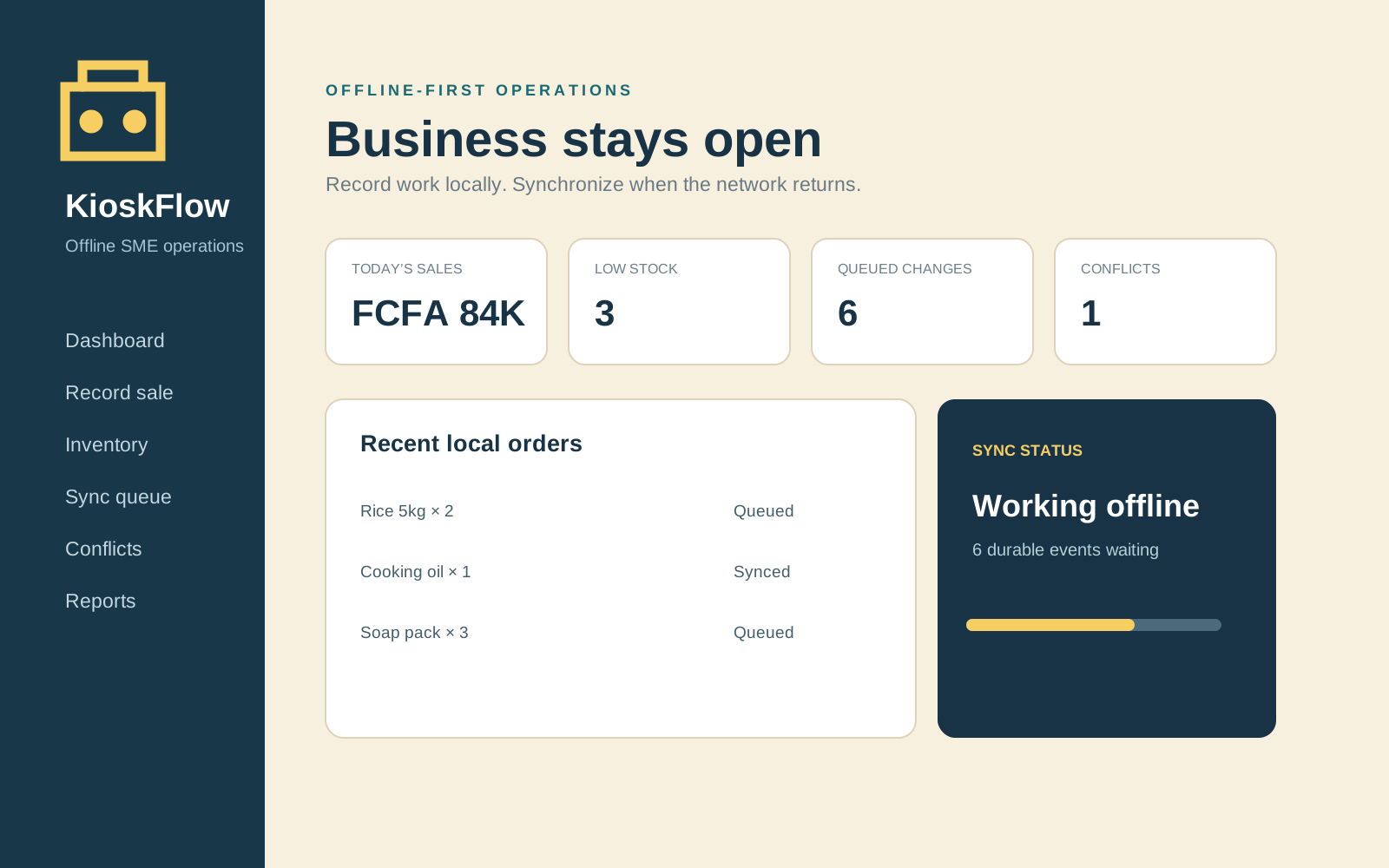
KioskFlow lets a small business continue recording sales and protecting inventory when connectivity is unreliable. A valid transaction is saved on the device first, clearly marked for synchronization and safely replayed when connectivity returns.
Small businesses, field teams and product teams serving users who cannot assume continuous, affordable connectivity.
My role
I designed the offline transaction boundary, IndexedDB model, synchronization outbox, conflict workflow, service-worker cache, operational interface and unit-tested policies.
Capabilities demonstrated
- Installable progressive web application
- IndexedDB persistence for orders and inventory
- Local stock validation
- Durable synchronization outbox
- Visible online, offline and synchronization states
- Explicit conflict resolution and JSON reporting
System flow
Important decisions
Local confirmation is treated as a real state, not disguised as a completed server write. Business data and synchronization intent remain inspectable, and concurrent versions become explicit conflicts instead of silent overwrites.
Beyond the happy path
The service worker keeps the application shell available while IndexedDB preserves business records across refreshes. Queue state and conflicts remain visible to the operator.
Testing and evidence
Unit tests cover stock transitions and conflict policies. The interface uses synthetic inventory and server acknowledgements.
Current limitations
The demonstration is single-device and uses a simulated server boundary. It does not claim production authentication, cross-device encryption or real inventory settlement.
Production extension path
A production version would add organization identity, device registration, encrypted sensitive fields, idempotent sync endpoints, delta synchronization, tombstones and queue monitoring.
Tools and concepts
Let’s work together
Building something that needs to work beyond the happy path?
I help teams turn complex product, integration and reliability requirements into clear, maintainable software.